The ancient Chinese practice of feng shui aims to harmonize the energy of our environments to promote a positive flow of qi. Qi is energy. In feng shui, it’s important to influence our spaces to conduct positive energy, which can provide us with peace and prosperity.
By using color, feng shui practitioners can transform rooms in our homes to promote better well-being. Color has been shown to impact our moods and impressions of our environments. Since color can influence our emotions, it’s a vital part of the practice of feng shui. Additionally, color is one of the simplest swaps to make in any home design.
So, today we’re sharing some of the best feng shui colors to introduce to your palette to remodel your space and invite a positive flow of energy to your home.
Understanding the elements of feng shui
There are five elements in feng shui which can be used to bring balance and harmony to a space. Colors are attributed to each element, making this a foundational aspect of feng shui design.
Wood
The wood element is associated with expansiveness, vitality, and growth. Greens and blues are colors belonging to this element.
Fire
Passion and illumination are qualities of the fire element. The main color of this element is red.
Earth
The earth element inspires feelings of being grounded and stable. It promotes self-care with its key colors being brown, orange, and yellow.
Metal
The metal element relates to precision, efficiency, clarity, and beauty. Colors like white and metallic are associated with this element.
Water
Water represents tranquility, calmness, and peacefulness. The energy of this element is flowing and delicate. The main color belonging to this element is black.
Knowing how the colors are associated with certain elements in feng shui can help you create a harmonious and balanced design using both color and material to create a peaceful look.
Best feng shui colors
Below are some of the best colors to use in a feng shui design. Here’s when and where you should use these tones for a positive qi.
White
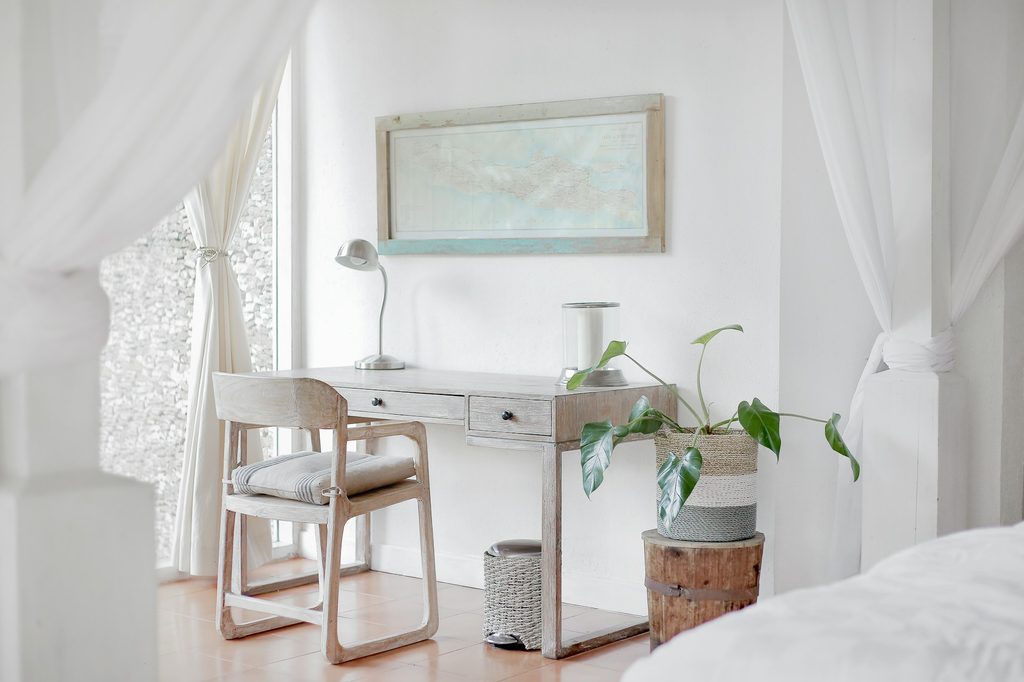
White is associated with the metal element in feng shui. It inspires mental clarity, efficiency, and beauty. White is a blank slate that feels fresh and innovative. In the bagua map, white is connected to children and creativity. You can use white to provide a clean and stress-free look to your environment. It’s a particularly useful color for home offices or places of study.
Black
Opposite white, black represents the yin aspect of the Tai Qi symbol and is associated with the water element. Black exudes stillness, contemplation, wisdom, and flow. In the bagua map, black is the color of career or life journey.
The color black is most auspicious in the north sector of the home or used in rooms to balance white. The home office can be a good place to strike this yin-yang balance. However, many feng shui practitioners suggest using black as an accent tone, doing so with intention and purpose since black is such a powerful color.
Gray
Gray comes in various shades and undertones, making it one of the most versatile neutrals. In feng shui, it represents the metal element and offers clarity and connection. On the bagua map, it is associated with helpers and travel.
You can use gray in nearly any room when utilizing feng shui in your design. Though gray is most potent in the northwest space of your home or in foyers, entryways, mudrooms, and entertainment spaces.
Blue
In feng shui, different shades of blue are connected to different elements and associations. For example, lighter blues and teal are attributed to the wood element, representing growth and vitality. Alternatively, darker blues, like navy and deep black-blue, are connected to the water element, representing flow and tranquility.
In the bagua map, lighter blues and teals can be used for spaces devoted to family. Living rooms and family rooms are great places for these tones. You can use darker blues in offices, rooms where you conduct finance, or the bedroom. Dark blue is often connected to finance, career, or self-exploration.
Knowledge sectors of the home are also great for certain blue tones.
Green
Green is the color of vitality, regeneration, and growth in feng shui, which is associated with the wood element. It is connected to the family sector of the bagua map and is ideal for living spaces, kitchens, and dining rooms where family members gather.
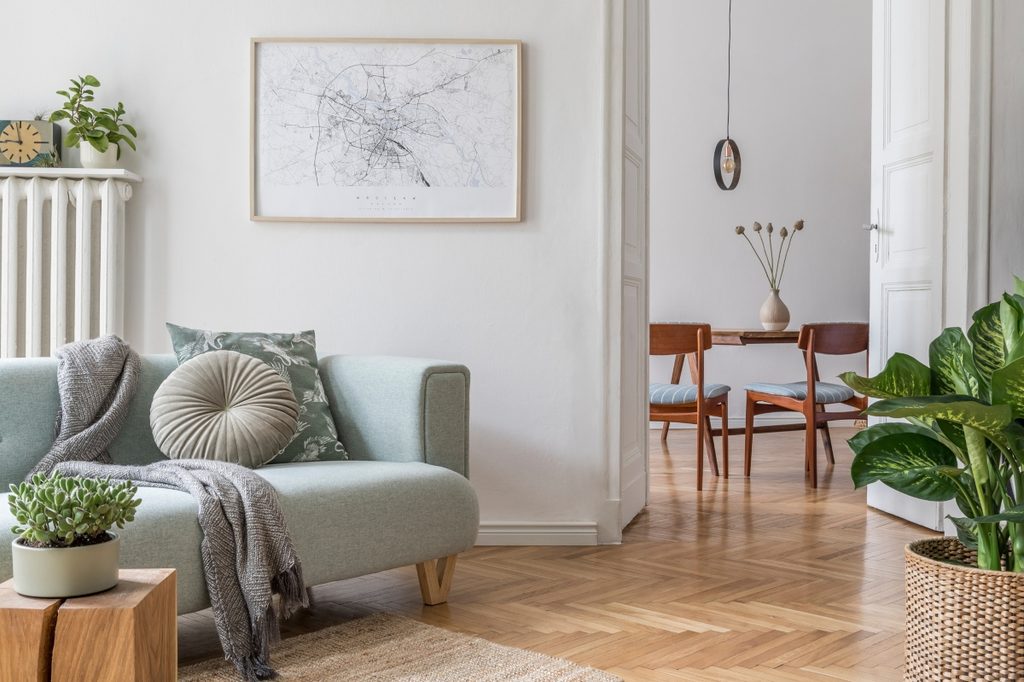
Many feng shui practitioners encourage homeowners to layer with different shades of green for the maximum benefit. A pastel green wall with a variety of green houseplants can promote positive qi.
Red
Red is the most powerful color in feng shui and is often used to repel negative energy. Red represents the fire element and is associated with the fame and reputation sector of the bagua map.
It’s best to use this color in moderation by accenting your space rather than going all out. Red is great for front doors or entryway rugs to attract positive attention in your reputation sector and repel negative influence.
You can also add red accents to the bedroom to promote passion and romance.
Yellow
Yellow is a bright and uplifting color. In feng shui, it can represent both the earth and fire elements. Bright golden yellows and pastels are often attributed to earth, while red-tinted yellows and oranges are connected to fire.
Yellow is a great color for the health and unity sector of the home, based on the bagua map. Use yellow in kitchens or central rooms. You may also consider adding it to bedrooms to promote grounding and well-being.
The art of feng shui promotes health and wellness based on ancient Chinese philosophy. Utilizing color is an essential part of encouraging a positive flow of qi in the home and can greatly impact your feng shui design.